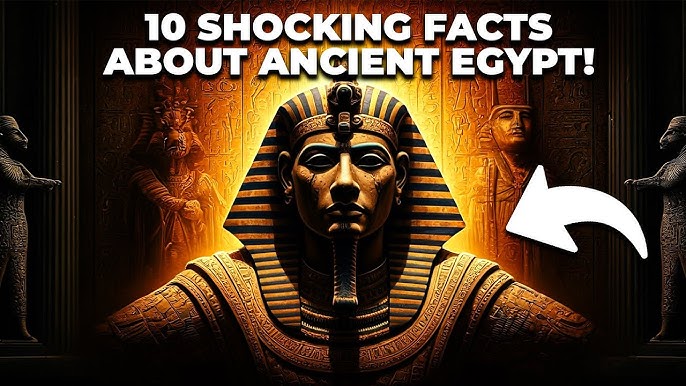
History has a habit of hiding its most extraordinary chapters. The ancient civilisation that built monuments still standing after 4,500 years deserves far more than a two-page spread in a school textbook.
The truth is, the secrets of Ancient Egypt uncovered by modern researchers over the past three decades have shattered long-held assumptions. What archaeologists, linguists, and historians are finding today reads less like a textbook and more like a thriller.
Why History Class Only Scratched the Surface
Standard curricula taught us that pharaohs ruled, pyramids were tombs, and mummies were wrapped in linen. That framework is not wrong, however, it is simply incomplete.
The hidden secrets of ancient Egyptian civilisation are emerging through advanced ground-penetrating radar, satellite imaging, and breakthroughs in hieroglyph translation. These tools are rewriting the record. Shocking facts about Ancient Egypt are not the domain of conspiracy theorists. They come from peer-reviewed journals and excavation reports filed by the world’s leading institutions.
Top 10 Shocking Secrets
1. The Great Pyramids May Have Hidden Chambers
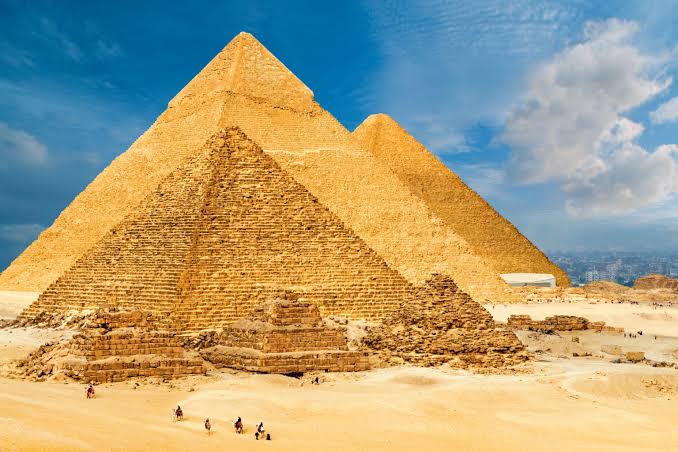
In 2017, the ScanPyramids project detected a large void inside the Great Pyramid using muon tomography. This space, roughly the size of a commercial aircraft, had no known purpose. The pyramids’ hidden chambers may still hold artefacts or answers, that will transform our understanding entirely.
2. Tutankhamun’s Death Was Far More Suspicious Than Reported
Tutankhamun controversies have swirled since Howard Carter opened the tomb in 1922. Modern CT scans reveal he suffered multiple fractures and possible malaria. Some forensic analysts argue the evidence points to a violent death rather than natural causes.
3. Ancient Egyptians Performed Brain Surgery
Mummification practices revealed something extraordinary: skulls from as early as 3000 BCE show evidence of trepanation, a deliberate surgical opening in the cranium. Some patients survived the procedure, based on bone regrowth found around the wounds.
Read Also: Best 15 Days Trip from Cape Town for Every budget
4. The Sphinx May Be Far Older Than We Think
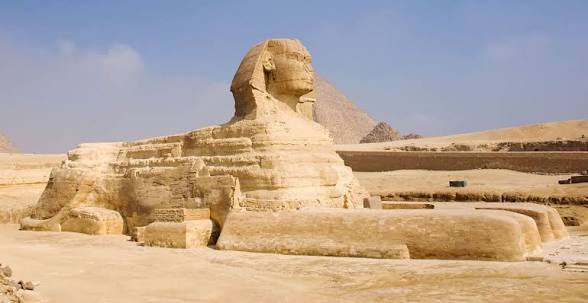
Geologist Robert Schoch proposed that erosion patterns on the Sphinx indicate water weathering, not wind and sand. This would push its construction back thousands of years before the accepted date. Giza plateau discoveries continue to challenge the conventional timeline.
5. Egyptian Workers Were Paid in Beer
Pyramid builders were not slaves. Archaeological evidence shows that Egypt workers received wages in bread, beer, and medical care. This is a fundamental reversal of the narrative popularized by Hollywood for a century.
6. The Amarna Period Was Deliberately Erased
The Amarna period revelations are among the most politically charged in Egyptology. Pharaoh Akhenaten introduced monotheism (the belief in and worship of a single, all-powerful god). His successors systematically destroyed every trace of him afterward. His city, Akhetaten, was buried under sand for millennia.
Read Also: 5 Best Places to Visit in Ghana
7. Nile Flood Rituals Involved Human Sacrifice
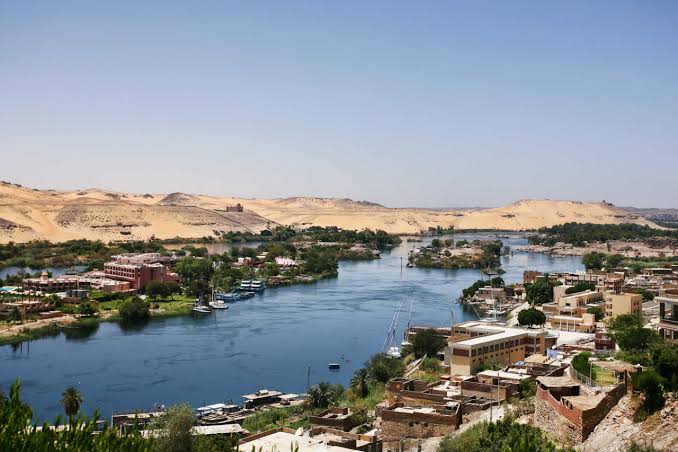
Nile river rituals were central to Egyptian survival, since the annual flood determined whether harvests would feed millions. Archaeological evidence from early dynasties suggests that humans, possibly prisoners or volunteers, were sacrificed to appease the river’s god, Hapy, during drought years.
8. Hieroglyphs Contain Layers of Hidden Meaning
Hieroglyph translation secrets have only recently been unlocked in full, thanks to computational linguistics. Certain glyphs function as multilayered codes, operating simultaneously as sounds, symbols, and ideograms. Scholars now believe scribes embedded philosophical arguments within what appeared to be administrative records.
9. Ancient Egyptian Religion Borrowed from Other Cultures
Ancient Egyptian religion myths were not created in isolation. Trade routes connected Egypt to Mesopotamia, Nubia, and the Levant, and religious images and symbols crossed those borders freely. The god Bes, for instance, likely originated in sub-Saharan Africa and was absorbed into the Egyptian pantheon over centuries.
Read Also: 9 Endangered Animals Found Only In West Africa and The Efforts to Save Them
10. Curses Were Real
Curses and ancient beliefs were not superstition alone. Tomb inscriptions contained detailed threats designed to terrify potential grave robbers. Priests understood the power of fear as a deterrent, and the curse of the Pharaohs surrounding Tutankhamun’s tomb was almost certainly an intentional cultural strategy rather than supernatural force.
The Engineering Enigma – How Did They Really Do It?
Ancient Egyptian engineering remains one of the most debated topics in science. The precision of the Great Pyramid’s alignment is not achievable with copper tools alone, according to several modern engineers who have attempted to replicate it.
Recent Giza plateau discoveries include what appear to be purpose-built harbors and internal ramp systems that could explain how multi-ton stone blocks were transported. Ancient Egypt mysteries never taught in school include the fact that workers may have used water to reduce friction, moving stones across wet sand far more efficiently than dry desert terrain would allow. These are not theories from the fringe. They are hypotheses supported by physical evidence, experimental archaeology, and hydraulic modeling.
Summary of Top Ten Secrets of Ancient Egypt
No. | Topic / Secret | Key Facts | Supporting Evidence / Notes |
1 | Hidden Chambers in the Great Pyramid | A large void was discovered inside the Great Pyramid that may be the size of a commercial aircraft. | Detected in 2017 by the Scan Pyramids project using muon tomography; purpose unknown. |
2 | Tutankhamun’s Death Mystery | His death may not have been natural, as fractures and disease were identified. | CT scans show bone fractures and possible malaria; theories suggest possible violent death. |
3 | Ancient Egyptian Brain Surgery | Egyptians performed early forms of brain surgery. | Skull evidence shows trepanation with signs of healing, suggesting survival. |
4 | The Sphinx May Be Older Than Believed | The Sphinx may predate current historical estimates by thousands of years. | Water erosion patterns studied by geologist Robert Schoch suggest older construction. |
5 | Workers Were Paid, Not Enslaved | Pyramid builders were likely skilled workers, not slaves. | Archaeological evidence shows payment in bread, beer, and medical care. |
6 | Amarna Period Erasure | Pharaoh Akhenaten’s reign was intentionally erased from history. | His successors destroyed records and buried his capital Akhetaten. |
7 | Nile Ritual Human Sacrifice | Early Nile rituals may have involved human sacrifice. | Evidence suggests sacrifices to appease the god Hapy during droughts. |
8 | Hidden Meaning in Hieroglyphs | Hieroglyphs may contain layered symbolic and coded meanings. | Computational linguistics reveals dual meanings: phonetic, symbolic, and ideological. |
9 | Foreign Influence on Religion | Egyptian religion was influenced by other cultures. | Trade with Nubia, Mesopotamia, and the Levant shaped gods like Bes. |
10 | Ancient Egyptian Curses | Tomb curses were psychological deterrents, not supernatural forces. | Inscriptions used fear-based warnings to prevent grave robbery. |
What Experts Are Saying Now
Leading Egyptologists now openly acknowledge that the field is in the middle of a revolution. Ground-penetrating radar has identified dozens of anomalies beneath the desert surface near Luxor and Saqqara, many of which have not yet been excavated. Pharaoh tomb discoveries announced in recent years, including a 4,300-year-old intact burial found in 2023 confirm that Egypt’s sands have not surrendered all their secrets.
The Ancient Egypt secrets uncovered in the last decade alone dwarf what was found in the entire twentieth century. That trajectory is accelerating.
The ancient world is not finished surprising us. Every grain of sand shifted by an archaeologist’s brush brings us closer to truths that redefine human history. The Ancient Egypt secrets uncovered so far are only the beginning and the most astonishing discoveries may still be buried, waiting.
Frequently Asked Questions
What are the most shocking discoveries about Ancient Egypt?
Recent archaeological findings suggest that Ancient Egypt civilization was far more advanced than previously believed. Discoveries include hidden pyramid chambers, evidence of advanced medical procedures, rewritten timelines of pharaohs, and new interpretations of religious practices. These findings continue to reshape what we know about ancient history.
Did the Great Pyramid really contain hidden chambers?
Yes. In 2017, the ScanPyramids project used muon tomography and detected a large, unexplained void inside the Great Pyramid. This space, comparable in size to a commercial aircraft, has not yet been fully explored, and its purpose remains unknown.
Was King Tutankhamun’s death natural or suspicious?
Although earlier theories suggested natural causes, modern CT scans reveal that Tutankhamun suffered multiple fractures and possible malaria. Some researchers now argue that these findings could indicate a more violent or mysterious cause of death, making his case one of Egyptology’s biggest controversies.
Were the pyramids built by slaves?
No. Evidence from archaeological excavations shows that pyramid workers were not slaves. Instead, they were skilled laborers who were compensated with food such as bread and beer, and they also received medical care. This completely challenges older Hollywood-style narratives.
How advanced was Ancient Egyptian writing and hieroglyphs?
Hieroglyphs were far more complex than simple writing. Modern research shows they operated on multiple levels, phonetic, symbolic, and conceptual. Recent computational linguistics studies even suggest scribes may have embedded deeper philosophical meanings within administrative texts.