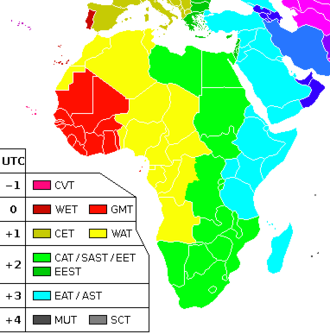
Have you ever been interested in time zones but found it a bit too confusing to understand, or when you’re travelling or doing business across multiple countries, it’s hard to keep track of the time? Well, you’re not alone. Time zones can be confusing, especially if you’ve wondered, “What is West Africa time zone?”.
Come along with me as we locate and understand West Africa time zone maps as easily as counting 1,2,3.
What is the Time Zone in West Africa?
Time zones aren’t just about telling time; they affect trade, travel, and social life. Imagine trying to schedule a virtual meeting with someone in Dakar, Senegal, while you’re in Lagos, Nigeria. Without knowing the correct time difference, you might show up an hour early or late!
Most countries in West Africa use a time standard known as West Africa Time (WAT), which is UTC +1. This means that if it’s 12:00 noon in London (UTC 0), it’s 1:00 PM in Lagos or Abuja.
However, not every West African country shares the same time zone. Due to geography and historical reasons, there are slight variations across the region. That’s why a West African time zone map is super helpful.
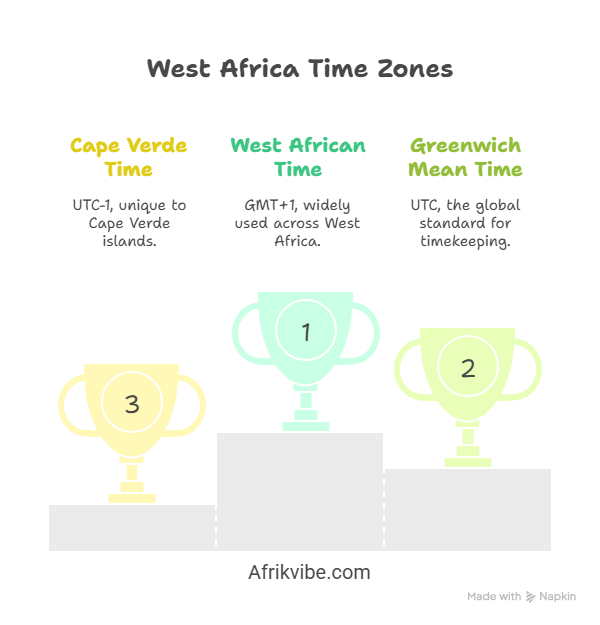
Read also: The Time Zones in West Africa
The 3 Major West Africa Time Zone Maps
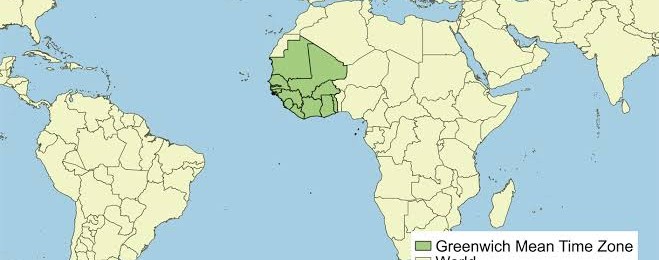
Map 1: UTC (Greenwich Mean Time – GMT)
Greenwich Mean Time(GMT) is one of the most important and widely recognised time zones globally. GMT refers to the mean solar time at the Prime Meridian, which passes through Greenwich, London. Several West African countries follow GMT as their standard time throughout the year. Unlike other regions that adopt daylight saving time, most West African countries stay on GMT all year.
Greenwich Mean Time (GMT), also called Greenwich meridian, was adopted by countries like Ghana, Senegal, The Gambia, Mali, Burkina Faso, Togo, Liberia, Guinea, Guinea-Bissau and Ivory Coast, which fall under UTC 0 (GMT). They share the same time as London during winter, but not during daylight saving time, as West African countries generally don’t observe daylight saving time.
On a West African time zone map, you will notice that GMT countries are located along the western edge of the continent.
Benefits of GMT in West Africa:
- Synchronises well with global financial centres like London.
- Simplifies trade with Europe since many European countries are only 1–2 hours ahead.
- Easy to manage for travellers arriving from Europe or North America.
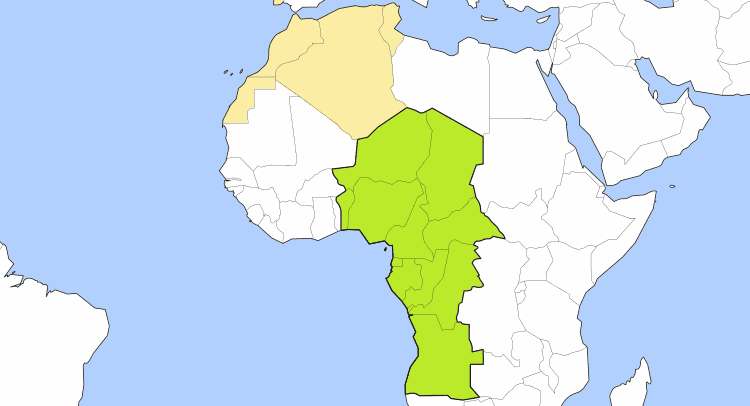
Map 2: UTC +1 (West Africa Time – WAT)
West African Time(WAT) is GMT+1, meaning it is one hour ahead of Greenwich Mean Time. For example, if it is 12:00 PM GMT in Ghana, it will be 1:00 PM WAT in Nigeria. It is the time standard used in most of the western and central Africa, including countries such as Angola, Cameroon, Benin, Equatorial Guinea, Chad, Nigeria and Niger.
On the West African time zone map, you will see WAT countries in the central and eastern parts of West Africa.
Benefits of WAT in West Africa:
- It’s the busiest time zone in Africa because it covers many economic hubs like Lagos and Abuja in Nigeria.
- Many regional organisations, such as ECOWAS (Economic Community of West African States), often schedule meetings based on WAT.
Also read: 7 Best West African Countries To Visit as a Tourist (& why)
Map 3: UTC -1 (Cape Verde Time)
Cape Verde Time(CVT)is a time zone observed only in Cape Verde, an Atlantic island off Africa’s west coast. Cape Verde operates on UTC -1, which is one hour behind GMT.
This island nation has its own schedule due to its Atlantic location, making it stand out from mainland West Africa.
Benefits of CVT in West Africa:
- Important for maritime trade and tourism since Cape Verde attracts visitors from Europe and North America.
- No daylight saving time adjustments needed.
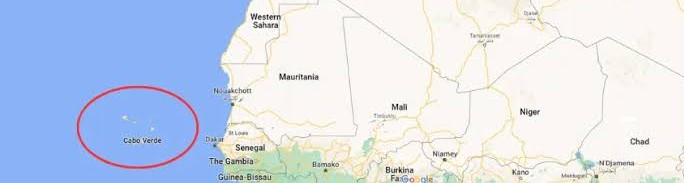
West African Time Zone Map Locations
To better understand what is the time zone in West Africa, imagine a horizontal map of the region:
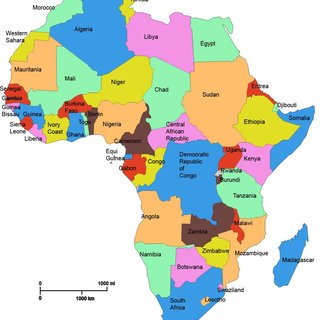
- The far west (Cape Verde) uses CVT (GMT-1).
- The middle belt (Senegal, Ghana, Liberia, Mali, etc.) uses GMT (GMT+0).
- The east (Nigeria, Niger, Cameroon, Chad) uses WAT (GMT+1).
Also read: 15 Most Romantic Cities In Africa Every Couple Should Know
Time Zone Tips for Travellers and Businesses
Now that you understand the West African time zones, here are some practical tips:
- Always confirm local time before travelling. Flight schedules are usually set in the local time zone.
- Use world clock apps. This is helpful if you frequently communicate across GMT, WAT, and CVT regions.
- Plan meetings carefully. For businesses, a 1-hour difference might seem small but can affect schedules.
- Be mindful of global time differences. If you are in New York or London, calculate the difference correctly to avoid confusion.
Time zones don’t have to be boring. By understanding the list of time zones in West Africa and using a West African time zone map, you can make travel and communication smoother.
So, next time someone asks you “what is the time zone in West Africa?”, you can confidently explain that it varies but is mostly WAT (UTC +1), with a few exceptions like Ghana (UTC 0) and Cape Verde (UTC -1).
West Africa may seem small on the map, but its time zones play a huge role in global trade and travel. With our guide to understanding the 3 major time zone maps in West Africa, you’re now equipped to navigate schedules like a pro. Whether you’re planning a trip, setting up a virtual meeting, or just satisfying your curiosity, understanding time zones is a valuable skill.
Frequently Asked Questions About West African Time Zones
What are the three major time zones in West Africa?
West Africa mainly uses three time zones:
- Greenwich Mean Time (GMT, UTC+0): Used by countries like Ghana, the Ivory Coast, and Mali.
- West Africa Time (WAT, UTC+1): Used by Nigeria, Cameroon, and Angola.
- Cape Verde Time (CVT, UTC-1): Used by the Cape Verde Islands.
Why do some countries in West Africa use different time zones?
The differences are based on longitude, colonial history, and economic ties. For example, countries closer to the Greenwich meridian use GMT, while those further east use WAT. Cape Verde, being west of the meridian, uses CVT.
Do any West African countries observe Daylight Saving Time (DST)?
No. West African countries do not typically observe DST because they are near the equator, where daylight hours remain relatively constant year-round.
Which countries are in the same time zone as Nigeria?
Nigeria uses West Africa Time (WAT, UTC+1). Other WAT countries include Benin, Cameroon, Chad, Angola, DR Congo (western part), Gabon, and Niger.
How do the different time zones affect travel and trade in West Africa?
The time difference is small (at most two hours), so the impact is minimal compared to regions like Europe or the Americas. However, businesses and travellers still need to account for time differences when scheduling flights, virtual meetings, and cross-border trade activities.